literatura de cordel · folheto nº 1
Pull one off
the string.
Invocação
Leitor, come close and lend an ear,
set down your cup but keep it warm:
I sing of Cairé and the moon,
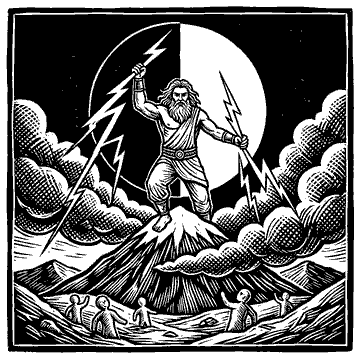
of coffee born in Tupã’s storm,
of eight dark faces in the sky
and one red river taking form.
neste folheto:
1
literatura de cordelnº 1
A Lendade Cairé
em cinco cantos e uma oficina
contado pelos lavradores
do cerrado, à luz da lua
um café
este folheto pertence a:
a lua de hoje
Read it aloud. Cordel was written for the ear: the poet sang it at the feira and sold the booklet after.
impresso em três cores: preto, sangue e ouro
canto i
Canto I: A Guardiã
the keeper of the rows
drag across the night to carve it
talhado 0% · every cut stays
In forests where the rivers bend,
where moonlight finds no living friend,
a goddess walked the coffee rows:
Cairé, who felt what darkness knows.
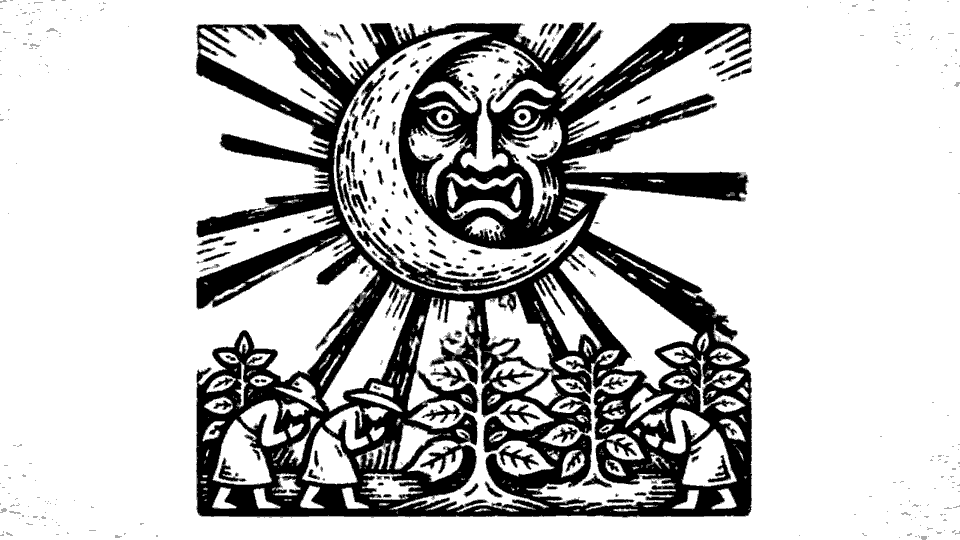
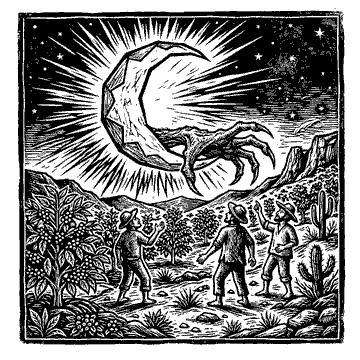
Before anyone had a word for coffee, Cairé had a hand for it. When the farmers slept she walked the dark between the plants, and one night she reached into the earth and pulled the first tree up into the light.
The night starts solid black. Every light in it is where a knife went in.
canto ii
Canto II: As Oito Luas
the eight moons
lua nova · silêncio
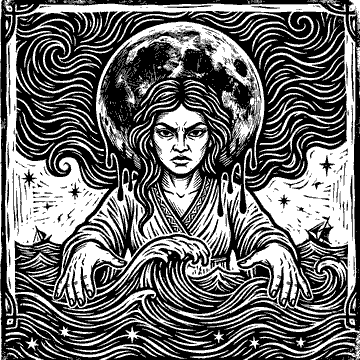
Naiá
Boca de Naiá
the farmers say: Rest the field. Seed sown in the dark comes up thin.
She watched the farmers plant by phase,
their hands like roots through mist and haze.
“Each moon,” she spoke, “shall choose a blend,
from lua nova to the crescent’s end.”
The farmers of the Cerrado still read the almanac before they read the weather. Cairé gave each of her eight faces a god, and each god a cup.
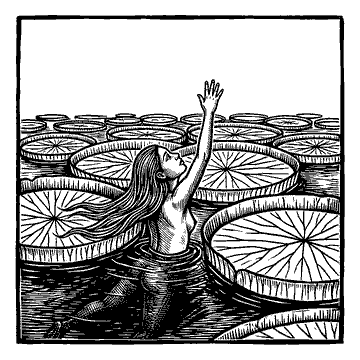
what Naiá sings, under the lua nova:
The river took the moon-struck girl,
the moon gave back a flower’s skin;
on nights the sky has nothing left
she opens wide and lets you in.
canto iii
Canto III: O Primeiro Rio
the first river
Two skies, a dry valley between them. Drag the inks together.
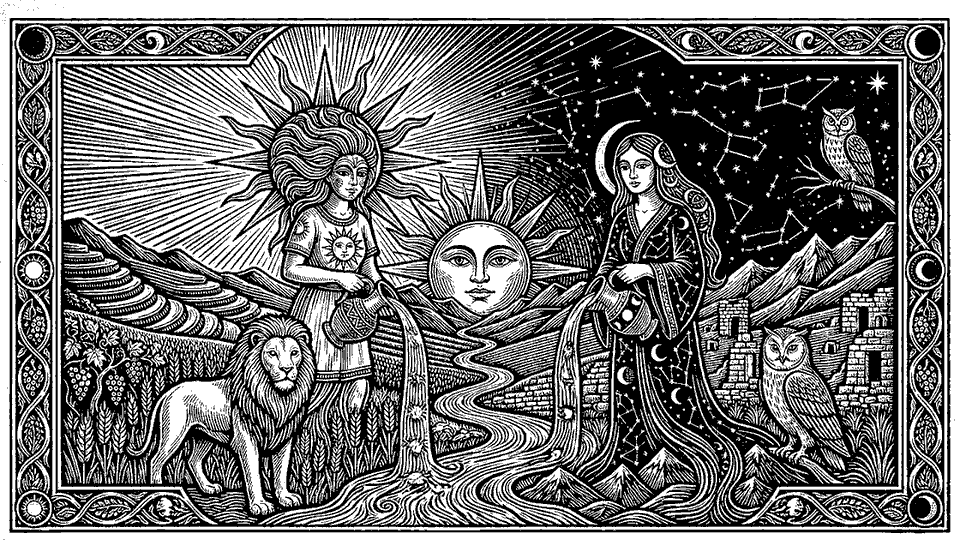
The Sun poured gold from her side of the sky,
the Moon poured night from the other side;
where both inks met, the valley drank
a dark river, three fingers wide.
The Sun and the Moon were never meant to share a sky. Cairé asked them to share a cup instead. Where the gold met the night, a third colour ran: coffee.
canto iv
Canto IV: O Ritual
the ritual
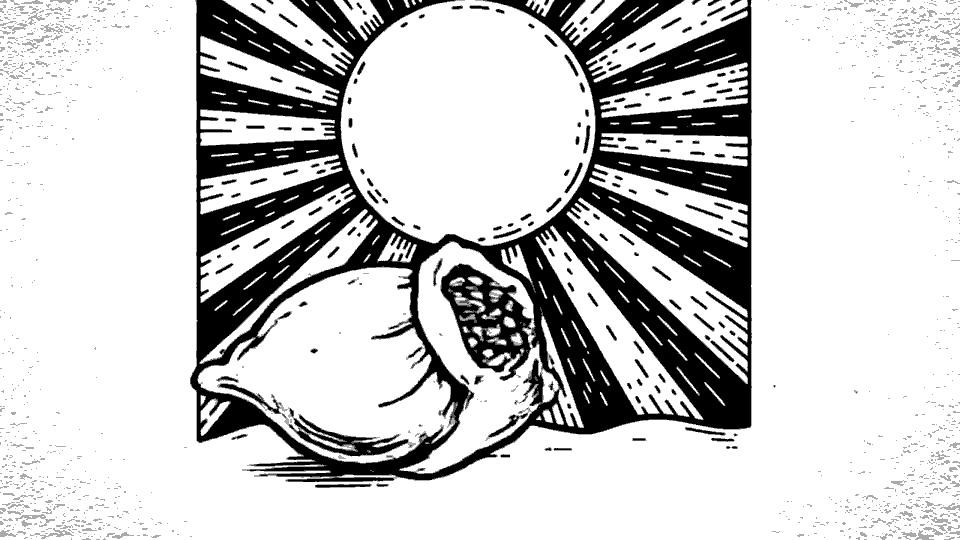
tonight the moon pours
reading the sky…
So drink by moon, as Cairé said.
Let lunar light choose what is fed
into your cup, your morning rite:
a sip of forest, flame, and night.
The beans go in the sack, the sack goes to the fire, the fire goes to the pot, and the pot goes to whoever is still awake. That part of the legend happens every night.
canto v
Canto V: A Feira
the market of nineteen
Nineteen folhetos on the string,
nineteen faces, carved and bright;
nobody reads before they buy:
you choose the one that holds your sight.
At the feira nobody read a folheto before paying for it. You picked the cover that stared back. Pick one.
ciclo de cairé · the eight moons
rituais & luas raras · for focus, rest and the odd moon
as origens · the forest’s own
← swipe along the string →
the back pages
A Oficina
ink it, rub it, peel it. your turn.
One block of wood, one gouge, one hand,
no eraser and no going back;
what you cut out will print as paper,
what you leave standing prints in black.
sharpening the gouge…
roll the ink across the block · 0%
entinte ink the block
On a woodblock the picture runs backwards, and everything meant to stay white is cut away. Roll the ink thin and even across what is left standing.
esfregue rub the paper
Paper down, then the back of a spoon in small strokes until the picture ghosts through the sheet. Patience is the press.
puxe peel the proof
Lift it from one corner. Every proof comes out a little different.
- cordel, n.
- String. Folhetos hung on twine at the feiras of Brazil’s Nordeste. From the late 1800s they were the news, the novel and the almanac, sung aloud by the poet before anyone paid.
- xilogravura
- Shee-lo-gra-VOO-ra: xylon, wood, and gravura, engraving. A plank of umburana, a gouge and a pocketknife were cheaper than a photo plate, so the covers were carved.
- j. borges
- José Francisco Borges (1935–2024), of Bezerros in Pernambuco, carved his first cover for his own cordel in 1964 and became one of Brazil’s best-known printmakers.
- 2018
- Brazil’s national heritage institute, IPHAN, registered literatura de cordel as Intangible Cultural Heritage of Brazil.
Every cover at the feira had a hero on it. The last canto is about you.
sharpening the gouges…
Fim
Cut from night by moonlit hand,
as the farmers tell it still,
in three inks on a paper sheet:
read it out to whoever will.
É de Cairé, the moon’s own word;
the rest is in your cup to fill.
cordel poets signed the last stanza: read the first letters down.
The revolution will be printed.
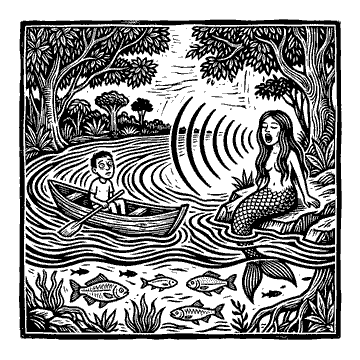
Every god in this folheto is a 12 × 18 in print in its three colours, for $38. Cordel is market art: it hangs at the feira next to the beans. Hang one where you drink your coffee.
At the feira one folheto was read aloud to the whole street, then passed hand to hand. Pass this one.